




';
}
// Same .tc-room skeleton as renderRoomRow (avatar/info/top/bottom) so a group row matches the
// 1:1 rows visually — data-type="group" + data-gid instead of data-cid/data-uid is what the
// click-delegation in renderRooms() switches on. No online/typing indicator (doesn't apply to
// a group), and the avatar is a rounded square instead of a circle as the only visual cue
// distinguishing a group from a person, mirroring common chat-app convention.
function renderGroupRow(group) {
var gid = group.gid;
var name = group.name || '';
var lastMsg = group.lastMessage;
var preview = '';
if (lastMsg) {
preview = parseDisplayText(lastMsg.msm);
if (!preview) {
if (lastMsg.urlima && lastMsg.urlima.indexOf('public://') >= 0) preview = '📷';
else if (lastMsg.urlaudi && lastMsg.urlaudi.indexOf('public://') >= 0) preview = '🎵';
}
if (String(lastMsg.whosend) === String(userId)) preview = 'You: ' + preview;
} else {
preview = 'No messages yet';
}
var timeStr = group.updated ? fmtTime(unixToDbTimestamp(group.updated)) : '';
var unread = group.unreadCount > 0;
var active = activeGid === gid;
return '
';
}
var body = '';
if (msg.urlima === '_loading_') {
body += '
📷 Sending…
';
} else if (msg.urlima && msg.urlima.indexOf('public://') >= 0) {
var src = msg.urlima.replace('public://', FILES_BASE);
body += '';
}
if (msg.urlaudi && msg.urlaudi.indexOf('public://') >= 0) {
var asrc = msg.urlaudi.replace('public://', FILES_BASE);
body += '';
}
if (meta && meta.type === 'loc') {
body += locationLinkHtml(meta.lat, meta.lng);
} else if (!isSalt && text) {
body += '
' + linkifyText(escHtml(text)) + '
';
}
var time = fmtTime(msg.timestamp || '');
return '
'
+ metaHtml + body
+ '' + escHtml(time) + ''
+ '
';
}
// ── Render group messages ────────────────────────────────────────────────────
function renderGroupMessages(gid) {
var msgs = allGroupMsgs[gid] || [];
var $el = $('#tc-msgs');
var order = msgs.slice().reverse();
$el.html(order.map(renderGroupMsg).join(''));
$el.scrollTop($el[0].scrollHeight);
}
// Same shape as renderMsg(), plus a sender-name label on incoming bubbles — unlike a 1:1
// conversation, "not me" doesn't tell you who actually sent it. Reuses the identical
// urlima/urlaudi rendering, so images/audio sent from the Android app (or sendGroupImage()
// here) display correctly. Audio still has no send control in this web widget.
function renderGroupMsg(msg) {
var isMe = String(msg.whosend) === String(userId);
var side = isMe ? 'tc-out' : 'tc-in';
var parsed = parseInlineMeta(msg.msm || '');
var text = parsed.text;
var meta = parsed.meta;
var isSalt = (text.length === 18 && text.indexOf(' ') < 0);
var senderHtml = '';
if (!isMe) {
senderHtml = '
' + escHtml(msg.senderName || msg.whosend) + '
';
}
var metaHtml = '';
if (meta && meta.type === 'fwd') {
metaHtml = '
';
}
// ── Send (opc 11) ────────────────────────────────────────────────────────────
function sendMessage() {
var text = $.trim($('#tc-input').val());
if (!text || !activeCid) return;
$('#tc-input').val('').focus();
isTyping = false;
post({ opc: '11', userid: userId, cid: activeCid, msm: text, fid: '0' })
.then(function (resp) {
if (!resp) return;
var ok = (resp.resp === 3 || resp.resp === '3' ||
resp.resp === 11 || resp.resp === '11');
if (!ok) return;
var msg = {
id: resp.lastmid || String(Date.now()),
whosend: String(userId),
msm: text,
urlima: '',
urlaudi: '',
timestamp: new Date().toISOString().replace('T', ' ').substr(0, 19)
};
if (!allMsgs[activeCid]) allMsgs[activeCid] = [];
allMsgs[activeCid].unshift(msg);
renderMessages(activeCid);
if (socket && socket.connected) {
socket.emit('send-message', {
id: resp.lastmid,
chatId: activeCid,
from: String(userId),
to: String(activeUid),
message: text,
type: 'text'
});
}
});
}
// ── Send group message ───────────────────────────────────────────────────────
// Purely socket-based — group-message-send both persists (tc_group_message, via the
// signaling server) and delivers, unlike 1:1's HTTP-then-socket-notify split. The server
// echoes the message back to the sender too (see group-message-send in signaling-server-2.js),
// so onGroupSocketMessage() is what actually appends it here — no optimistic local insert.
function sendGroupMessage() {
var text = $.trim($('#tc-input').val());
if (!text || !activeGid) return;
if (!socket || !socket.connected) return;
$('#tc-input').val('').focus();
isTyping = false;
socket.emit('group-message-send', {
gid: parseInt(activeGid, 10),
from: userId,
message: text,
type: 'text',
localId: 'web-' + Date.now() + '-' + Math.random().toString(36).substr(2, 8)
});
}
// ── Send group image (group-message-send, type:"image") ─────────────────────
// Unlike 1:1 (HTTP upload then socket notify), groups have no HTTP upload endpoint —
// the server expects the raw file as a base64 string on the same socket event used for
// text (see group-message-send in signaling-server-2.js), and does its own resize/compress
// (sharp, 1024x1024 max, jpeg75) server-side before writing it and echoing "group-message"
// back to every member including the sender. That echo is what onGroupSocketMessage() uses
// to both confirm this optimistic placeholder (matched by localId) and actually display it.
function sendGroupImage(file) {
if (!activeGid) return;
if (!socket || !socket.connected) return;
if (pendingGroupImage) return; // one at a time — button is disabled meanwhile anyway
var gid = activeGid;
var localId = 'web-img-' + Date.now() + '-' + Math.random().toString(36).substr(2, 8);
pendingGroupImage = { gid: gid, localId: localId };
if (!allGroupMsgs[gid]) allGroupMsgs[gid] = [];
allGroupMsgs[gid].unshift({
id: localId, localId: localId, whosend: String(userId), senderName: myName,
msm: '', urlima: '_loading_', urlaudi: '', created: Math.floor(Date.now() / 1000)
});
renderGroupMessages(gid);
$('#tc-img-btn').attr('disabled', 'disabled');
// Safety net — if the server/socket never answers at all (disconnect mid-flight etc.),
// don't leave "Sending…" stuck forever (see the 1:1 image-send bug this mirrors).
var timeoutId = setTimeout(function () { onGroupMessageError({}); }, 20000);
compressImageIfNeeded(file, function (uploadFile) {
var reader = new FileReader();
reader.onload = function () {
clearTimeout(timeoutId);
if (!pendingGroupImage || pendingGroupImage.localId !== localId) return; // already cleared
var base64 = (reader.result || '').split(',')[1] || '';
if (!base64 || !socket || !socket.connected) { onGroupMessageError({}); return; }
socket.emit('group-message-send', {
gid: parseInt(gid, 10),
from: userId,
message: '',
type: 'image',
filedata: base64,
localId: localId
});
};
reader.onerror = function () {
clearTimeout(timeoutId);
onGroupMessageError({});
};
reader.readAsDataURL(uploadFile);
});
}
// Clears whatever group image send is currently in flight — used both for explicit
// "group-message-error" replies (bad file, not a member, rate-limited) and the
// client-side timeout above. Doesn't distinguish by localId: only one send is ever
// in flight at a time (the button is disabled meanwhile), so there's nothing to match.
function onGroupMessageError(data) {
if (!pendingGroupImage) return;
var gid = pendingGroupImage.gid;
var localId = pendingGroupImage.localId;
pendingGroupImage = null;
$('#tc-img-btn').removeAttr('disabled');
if (allGroupMsgs[gid]) {
allGroupMsgs[gid] = allGroupMsgs[gid].filter(function (m) { return m.localId !== localId; });
}
if (activeGid === gid && isOpen) renderGroupMessages(gid);
if (data && data.error) { console.warn('group image send failed:', data.error); }
}
// Resizes/re-encodes as JPEG when a file exceeds COMPRESS_THRESHOLD. Skips GIFs —
// redrawing to canvas would flatten an animated GIF to a single static frame.
// Falls back to the original file untouched if decoding/encoding fails for any reason.
function compressImageIfNeeded(file, callback) {
if (file.size <= COMPRESS_THRESHOLD || file.type === 'image/gif') {
callback(file);
return;
}
var img = new Image();
var url = URL.createObjectURL(file);
img.onload = function () {
URL.revokeObjectURL(url);
var scale = Math.min(1, COMPRESS_MAX_DIM / Math.max(img.width, img.height));
var canvas = document.createElement('canvas');
canvas.width = Math.round(img.width * scale);
canvas.height = Math.round(img.height * scale);
canvas.getContext('2d').drawImage(img, 0, 0, canvas.width, canvas.height);
canvas.toBlob(function (blob) {
callback(blob || file, !!blob);
}, 'image/jpeg', COMPRESS_QUALITY);
};
img.onerror = function () {
URL.revokeObjectURL(url);
callback(file);
};
img.src = url;
}
// ── Send image (opc 11I) ─────────────────────────────────────────────────────
function sendImage(file) {
if (!activeCid) return;
var tempId = '_img_' + Date.now();
if (!allMsgs[activeCid]) allMsgs[activeCid] = [];
allMsgs[activeCid].unshift({
id: tempId, whosend: String(userId), msm: '', urlima: '_loading_',
urlaudi: '', timestamp: new Date().toISOString().replace('T', ' ').substr(0, 19)
});
renderMessages(activeCid);
// .attr()/.removeAttr(), not .prop() — this site's jQuery predates 1.6 (which is
// when .prop() was introduced), and every other call in this file sticks to
// pre-1.6-safe APIs already.
$('#tc-img-btn').attr('disabled', 'disabled');
compressImageIfNeeded(file, function (uploadFile, wasCompressed) {
var form = new FormData();
form.append('opc', '11I');
form.append('userid', String(userId));
form.append('cid', activeCid);
form.append('image', uploadFile, wasCompressed ? 'upload.jpg' : file.name);
fetch(API_URL, { method: 'POST', body: form })
.then(function (r) { return r.ok ? r.json() : null; })
.then(function (resp) {
allMsgs[activeCid] = allMsgs[activeCid].filter(function (m) { return m.id !== tempId; });
if (resp && (resp.resp === 3 || resp.resp === '3') && resp.urlima) {
var msg = {
id: resp.lastmid || String(Date.now()),
whosend: String(userId),
msm: '',
urlima: resp.urlima,
urlaudi: '',
timestamp: new Date().toISOString().replace('T', ' ').substr(0, 19)
};
allMsgs[activeCid].unshift(msg);
if (socket && socket.connected) {
socket.emit('send-message', {
id: resp.lastmid,
chatId: activeCid,
from: String(userId),
to: String(activeUid),
message: '',
urlima: resp.urlima,
type: 'image'
});
}
}
renderMessages(activeCid);
})
.catch(function () {
allMsgs[activeCid] = allMsgs[activeCid].filter(function (m) { return m.id !== tempId; });
renderMessages(activeCid);
})
.then(function () { $('#tc-img-btn').removeAttr('disabled'); });
});
}
// ── Inline meta parser ────────────────────────────────────────────────────────
function parseInlineMeta(raw) {
if (!raw) return { text: '', meta: null };
if (raw.substr(0, FWD_MARKER.length) === FWD_MARKER) {
var end = raw.indexOf(META_ETX);
if (end < 0) return { text: raw, meta: null };
var sender = raw.substring(FWD_MARKER.length, end);
return { text: raw.substring(end + 1), meta: { type: 'fwd', sender: sender } };
}
if (raw.substr(0, REPLY_MARKER.length) === REPLY_MARKER) {
var rend = raw.indexOf(META_ETX);
if (rend < 0) return { text: raw, meta: null };
var parts = raw.substring(REPLY_MARKER.length, rend);
var sep = parts.indexOf(META_SEP);
var rsender = sep >= 0 ? parts.substring(0, sep) : parts;
var orig = sep >= 0 ? parts.substring(sep + 1) : '';
return { text: raw.substring(rend + 1), meta: { type: 'reply', sender: rsender, orig: orig } };
}
// Shared location — same "lat" + META_SEP + "lng" encoding the Android app writes
// (see LOC_MARKER / sendLocationMessage() in ActivityChat.java). No trailing text.
if (raw.substr(0, LOC_MARKER.length) === LOC_MARKER) {
var lend = raw.indexOf(META_ETX);
if (lend < 0) return { text: raw, meta: null };
var coords = raw.substring(LOC_MARKER.length, lend);
var lsep = coords.indexOf(META_SEP);
var lat = lsep >= 0 ? coords.substring(0, lsep) : coords;
var lng = lsep >= 0 ? coords.substring(lsep + 1) : '';
return { text: raw.substring(lend + 1), meta: { type: 'loc', lat: lat, lng: lng } };
}
return { text: raw, meta: null };
}
function parseDisplayText(msm) {
var p = parseInlineMeta(msm || '');
var t = p.text;
if (p.meta && p.meta.type === 'loc') return '📍 ' + LOC_LABEL;
if (t.length === 18 && t.indexOf(' ') < 0) return '';
return (p.meta ? (p.meta.type === 'fwd' ? '↪ ' : '↩ ') : '') + t;
}
// ── Badge & notifications ─────────────────────────────────────────────────────
function updateBadge() {
var n = Object.keys(unreadCids).length;
Object.keys(allGroups).forEach(function (k) {
if (allGroups[k].unreadCount > 0) n++;
});
var $b = $('#tc-badge');
if (n > 0) { $b.text(n).removeClass('tc-hidden'); }
else { $b.addClass('tc-hidden'); }
}
function showNotif(title, body) {
if (!('Notification' in window)) return;
if (Notification.permission === 'granted') {
new Notification(title, {
body: body || '',
icon: 'https://www.taleoi.com/sites/default/files/taleoi.ico'
});
} else if (Notification.permission === 'default') {
Notification.requestPermission();
}
}
// ── HTTP ──────────────────────────────────────────────────────────────────────
function post(params) {
var form = new FormData();
Object.keys(params).forEach(function (k) { form.append(k, String(params[k])); });
return fetch(API_URL, { method: 'POST', body: form })
.then(function (r) { return r.ok ? r.json() : null; })
.catch(function () { return null; });
}
// ── Helpers ───────────────────────────────────────────────────────────────────
// Group timestamps (tc_group.updated, tc_group_message.created) are unix seconds, unlike
// 1:1's "YYYY-MM-DD HH:MM:SS" strings — converts to that same shape (local time) so both can
// share fmtTime() and the plain string comparison renderRooms() sorts by.
// Formatted with UTC getters, not local — fmtTime() (below) always treats this
// "YYYY-MM-DD HH:MM:SS" shape as UTC (appending 'Z' before parsing), matching the raw
// DB timestamp strings 1:1 chat passes it directly. Using local getters here would hand
// fmtTime() an already-local time it then re-shifts by the viewer's UTC offset again.
function unixToDbTimestamp(unixSec) {
if (!unixSec) return '0';
var d = new Date(unixSec * 1000);
function pad(n) { return (n < 10 ? '0' : '') + n; }
return d.getUTCFullYear() + '-' + pad(d.getUTCMonth() + 1) + '-' + pad(d.getUTCDate()) + ' '
+ pad(d.getUTCHours()) + ':' + pad(d.getUTCMinutes()) + ':' + pad(d.getUTCSeconds());
}
function fmtTime(ts) {
if (!ts) return '';
// DB timestamps are plain "YYYY-MM-DD HH:MM:SS" in UTC (MySQL TIMESTAMP column).
// Without a trailing 'Z', the JS Date parser treats a date-TIME string (unlike a
// date-only string) as local time, not UTC — silently shifting displayed times by
// the viewer's UTC offset. The 'Z' forces correct UTC interpretation.
var d = new Date(ts.replace(' ', 'T') + 'Z');
if (isNaN(d.getTime())) return '';
var now = new Date();
if (d.toDateString() === now.toDateString()) {
return d.toLocaleTimeString([], { hour: '2-digit', minute: '2-digit' });
}
return (d.getMonth() + 1) + '/' + d.getDate();
}
function escHtml(s) {
return String(s == null ? '' : s)
.replace(/&/g, '&').replace(//g, '>')
.replace(/"/g, '"').replace(/'/g, ''');
}
function escAttr(s) { return escHtml(s); }
// Wraps http(s) URLs in a message's already-escaped text with clickable links. Must run
// AFTER escHtml() — matching against the escaped string is safe since escaping never
// introduces whitespace inside a URL run, and the entities it does introduce (e.g. "&"
// for a literal "&" in a query string) are exactly what a browser expects inside an href
// attribute anyway. target="_blank" + rel="noopener noreferrer" so following a link never
// navigates away from (or exposes window.opener to) the page the chat widget is floating on.
function linkifyText(escapedText) {
return escapedText.replace(/https?:\/\/[^\s<]+/g, function (url) {
var trail = '';
var m = url.match(/[.,!?:;)\]}'"]+$/);
if (m) { trail = m[0]; url = url.slice(0, -trail.length); }
if (!url) return trail;
return '' + url + '' + trail;
});
}
// A shared location (LOC_MARKER — see parseInlineMeta()) renders as a tappable card
// linking to Google Maps, matching how the Android app opens a geo: intent for the
// same coordinates. Uses an https:// maps URL instead since geo: isn't reliably
// clickable in desktop browsers.
function locationLinkHtml(lat, lng) {
var mapUrl = 'https://www.google.com/maps?q=' + encodeURIComponent(lat) + ',' + encodeURIComponent(lng);
return ''
+ '📍 ' + escHtml(LOC_LABEL) + '';
}
})(jQuery);
Activan sala de crisis por el Fenómeno de El Niño | taleoi.com
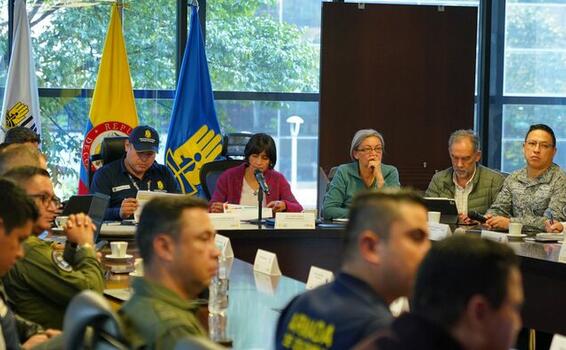
Desde noviembre se han registrado 144 eventos entre los que se encuentran incendios forestales, sequias y heladas, en 15 departamentos del país. Estas emergencias han afectado 1.023 personas, 405 familias y cerca de 2.000 hectáreas en Antioquia, Bolívar, Boyacá, Cauca, Caldas, Casanare, Caquetá, Cundinamarca, Huila, Magdalena, Meta Risaralda, Santander, Tolima y Vichada. En el país 6,4 millones de personas se encuentran susceptibles al mayor impacto de este fenómeno.
La Unidad Nacional para la Gestión del Riesgo de Desastres (UNGRD) en conjunto con el Ministerio de Ambiente y Desarrollo Sostenible (MinAmbiente) activaron la Sala de Crisis para coordinar las acciones del Sistema Nacional de Gestión del Riesgo de Desastres (SNGRD) ante los efectos del Fenómeno el Niño, que se prevé se intensifique en los próximos meses.
Con la participación de la ministra de Ambiente y Desarrollo Sostenible, María Susana Muhammad, y el subdirector para el Conocimiento del Riesgo de Desastres de la UNGRD Luis Carlos Barreto, se realizó este espacio en el cual los ministerios competentes en el tema, gobernadores y alcaldes de las principales ciudades analizaron las medidas a tomar en los territorios para, entre otros, defender el ambiente, luchar contra el cambio climático y ordenar los territorios alrededor del agua.
Ante este panorama, La UNGRD y MinAmbiente han priorizado 23 departamentos y 176 municipios debido a las afectaciones, condiciones de pobreza, sequia, incendios forestales, déficit de lluvias y susceptibilidad al desabastecimiento de agua.
Destacan en amenaza alta municipios de La Guajira (8), Cesar (5), Magdalena (4), Bolívar(3), Boyacá (2) Santander (2), Norte de Santander (2), Sucre (2), Córdoba (2),Tolima (1), Cauca (1), Caquetá (1). Aunque se concentran en estos lugares, no se descartan eventos en todo el territorio nacional.
Según Luis Carlos Barreto, subdirector para el Conocimiento del Riesgo de Desastres de la UNGRD, “el Sistema Nacional está preparado para atender cualquier eventualidad que se presente en los 32 departamentos del país. Desde que comenzó la declaración oficial del Fenómeno El Niño en noviembre de 2022, hemos estado desarrollando toda la preparación para la respuesta. Tenemos un plan de contingencia, en el cual estamos articulando todo el Sistema Nacional: Cuerpos de Socorro, Bomberos, Defensa Civil, Cruz Roja y todos los sectores para que estén atentos a poder atender cualquier situación adversa”.
Así mismo, indicó que se están coordinando acciones con los ministerios de Ambiente, Vivienda, Transporte, Energía y Agricultura, para garantizar el suministro de servicios básicos y el apoyo al sector rural. El subdirector advirtió que la temporada seca en el país que se extenderá hasta marzo o abril y se verá agravada por la incidencia del Fenómeno.
Por su parte, la ministra de Ambiente y Desarrollo Sostenible, María Susana Muhamad, afirmó que el país ha entrado en una fase de respuesta proactiva antelas emergencias climáticas. «Hemos cambiado la lógica de reaccionar a las crisis por la de prepararnos de la mejor manera posible. Para ello, hemos invertido $600.000 millones en acciones preventivas y hemos creado una Sala de Crisis que hará un seguimiento permanente y coordinará las acciones del Gobierno del Cambio y las autoridades territoriales», dijo.
además, informó que se acordó que las gobernaciones, alcaldías y entidades nacionales enviarán un reporte semanal de las emergencias en las regiones, con el fin de elaborar un informe que se presentará al Consejo de Ministros y permitirá mejorar la atención de estas situaciones.
Finalmente, hizo un llamado a los gobernadores y alcaldes para que revisen los planes de atención local, teniendo en cuenta la complejidad geográfica del país y las diversas emergencias que se pueden presentar, como deslizamientos, desbordamientos de ríos e incendios. «El llamado es a la prevención, estamos trabajando en una lógica de adaptación al cambio», concluyó.
El Gobierno Nacional anunció que se está realizando una campaña desensibilización llamada «El Niño no es juego», en la cual se difundirán piezas informativas para que la gente esté al tanto de la situación y de las acciones que se están llevando a cabo. «Queremos que la gente sepa que el fenómeno El Niño no es algo que nos sorprenda, sino que es algo que podemos prevenir y mitigar con la participación de todos. Estamos trabajando como sistema para poder afrontar de forma oportuna este Fenómeno.», puntualizó Luis Carlos Barreto de la UNGRD.
Agregar comentario
Log in or register to post comments